Our website uses cookies to improve and personalize your experience and to display advertisements (if any). Our website may also include third-party cookies such as Google Adsense, Google Analytics, and YouTube. By using the website, you agree to the use of cookies. We have updated our Privacy Policy. Click the button to view our Privacy Policy.

Avatar photo

Maxwell Knight

841 Posts
The 10 Human Bones and Organs With Still-Debated Functions

What makes 10 human bones and organs still controversial in scientific research

Introduction: Why Certain Physical Regions Continue to Baffle ResearchersModern anatomy has charted the human frame with extraordinary precision, although certain structures still lack a universally accepted purpose. Previously, various bones and organs were deemed "vestigial" and dismissed as evolutionary baggage. Nevertheless, continuous investigations within immunology, biomechanics, microbiology, and evolutionary biology persistently question those early hypotheses. Listed below are ten human bones and organs whose exact functions are still contested, only partially comprehended, or recently reevaluated.1. The AppendixOnce viewed as a pointless vestige inherited from plant-eating forbears, the appendix has experienced a notable turnaround in scientific perspective.Immune Function: It houses lymphoid…

Read More
The 8 Most Isolated Scientific Laboratories in the World

The significance of isolation in glaciology and astrophysics research

1. Amundsen–Scott South Pole Station (Antarctica)Situated at 90 degrees south latitude, the Amundsen–Scott South Pole Station rests atop almost 3,000 meters of ice, functioning as one of the planet's most isolated research outposts. Roughly eight months out of every year, severe winter weather completely isolates the base, bringing plummeting temperatures beneath −70 degrees Celsius alongside perpetual darkness across the terrain.The station supports astrophysics, glaciology, atmospheric science, and neutrino research. Its IceCube Neutrino Observatory, buried deep in Antarctic ice, detects high-energy neutrinos from distant cosmic events. The isolation minimizes light and radio interference, making it ideal for sensitive measurements. Winter population:…
Read More
The 10 Oldest Stock Exchanges in the World

Insights into the 10 oldest stock exchanges shaping global finance

IntroductionStock exchanges are among the most influential institutions in modern economic history. They formalized the buying and selling of securities, enabled large-scale capital formation, and helped shape global capitalism. The oldest exchanges emerged in Europe as trade expanded and merchants sought structured marketplaces for financial instruments. Over centuries, these institutions evolved from informal gatherings of brokers into sophisticated, technology-driven platforms handling trillions of dollars in transactions.Below is a detailed exploration of the 10 oldest stock exchanges in the world that continue to operate today, ranked by their year of establishment.1. Frankfurt Stock Exchange (Founded 1585)The Frankfurt Stock Exchange traces its…
Read More
Buying a Home in Cap Cana

Why Cap Cana stands out in the Dominican Republic’s property market

Buying a home is a decision that involves financial, personal, and environmental factors. For this reason, destinations such as Cap Cana in the Dominican Republic have sparked the interest of those seeking a primary residence, a second home, or a property with long-term appreciation potential. Its urban development, range of services, and location in the Caribbean are among the factors that account for its appeal.For those analyzing the Dominican Republic’s real estate market, the variety of available options is also a key factor. Inversiones AIDES has focused its services on advising clients, sourcing properties, and supporting them through the home-buying…
Read More
The 10 Costliest Financial Bailouts Paid With Public Money

Key facts about the troubled asset relief program’s role in the 2008 financial crisis

1. United States Troubled Asset Relief Program (TARP) – 2008The Troubled Asset Relief Program (TARP) remains recognized as one of the most massive and debated financial bailout initiatives ever undertaken. Passed amid the global financial meltdown of 2008, the government of the United States empowered an allocation of up to $700 billion aimed at propping up banks, insurance providers, and car manufacturers.Major beneficiaries included Citigroup, Bank of America, and American International Group (AIG). While not all allocated funds were ultimately spent, and a significant portion was later repaid, the scale of public exposure was unprecedented. At its peak, federal commitments…
Read More
Dolly Parton, queen of country music and humanitarian hero, dead at 80

Dolly Parton, a trailblazer in music and business, passes away at 80

Dolly Parton, one of the most recognizable figures in American music and entertainment, has died at the age of 80 at her home in Nashville. Her extraordinary career extended far beyond country music, encompassing songwriting, film, business and philanthropy.Dolly Parton, whose career stretched across more than five decades, died Tuesday at her home in Nashville, according to a statement from her family. She was 80.The family said Parton died peacefully and that a small private service would be held for her loved ones. Her death brings to an end the life and career of an artist whose influence reached far…
Read More
Antibiotics: how to care for your microbiome afterward

Rebuilding gut microbiome diversity after antibiotic treatment

How antibiotics affect your microbiomeAntibiotics save lives by killing or inhibiting bacteria, but they are rarely selective only for pathogens. They reduce gut microbial diversity, shift relative abundances, and can expand antibiotic-resistance genes. Common consequences include antibiotic-associated diarrhea (AAD), overgrowth of opportunistic pathogens such as Clostridioides difficile, altered immune signaling, and metabolic changes. The magnitude of disruption depends on the antibiotic class, dose, duration, and the individual’s baseline microbiome and health status.How long recovery takesRecovery timelines vary:Short courses (1–7 days) often produce measurable changes within days; diversity and many taxa commonly begin to rebound within weeks.Many studies report partial recovery…
Read More
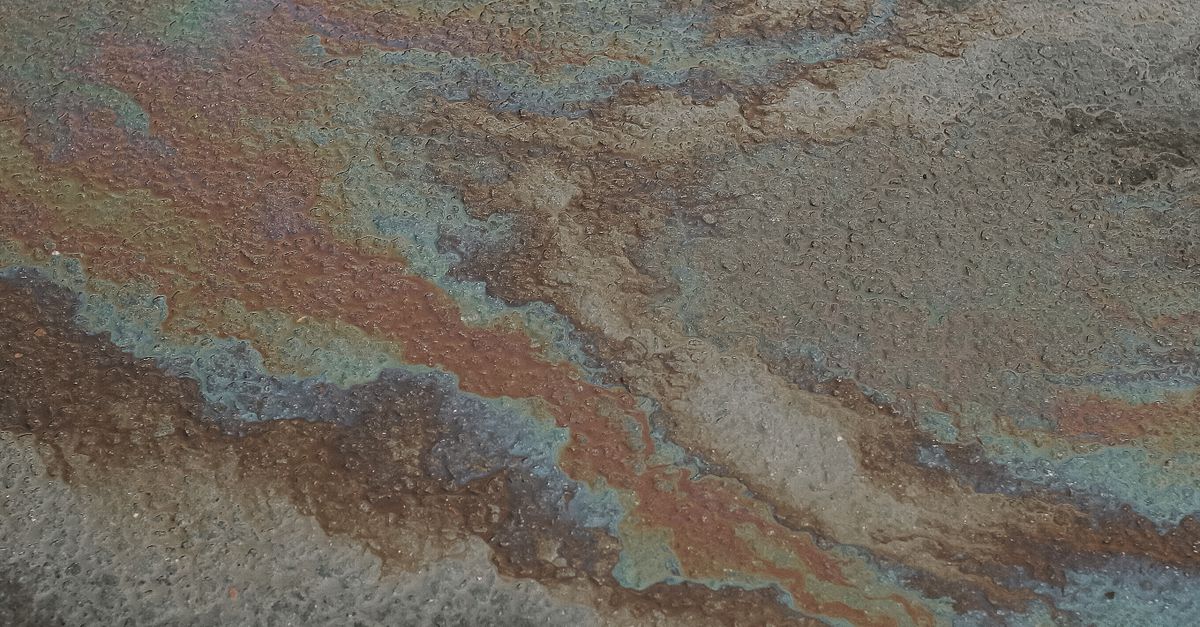
The 12 Most Devastating Oil Spills in History

How the 12 most extensive oil spills changed environmental awareness worldwide

Introduction: The Global Cost of Oil SpillsOil spills rank among the most destructive human-made environmental disasters. Whether caused by tanker accidents, offshore drilling failures, pipeline ruptures, or acts of war, large-scale oil spills devastate marine ecosystems, damage coastal economies, and leave long-term public health consequences. Millions of barrels of crude oil and refined petroleum products have entered oceans, rivers, and wetlands over the past century, reshaping environmental regulation and energy policy worldwide.Below are twelve of the worst oil spills in history, evaluated by volume discharged, ecological harm, economic fallout, and long-term repercussions.1. Gulf War Oil Spill (1991)Estimated spill: 6–8 million…
Read More
Why nuclear energy is back in public debate

Social risks and consequences of nuclear technology failures

Introduction: Nuclear Technology and Social RiskNuclear energy and weapons programs have shaped modern history with promises of progress and security. Yet when failures occur, their consequences extend far beyond radiation exposure. Nuclear disasters disrupt economies, fracture communities, alter public policy, and reshape global politics for generations. The following eight events reveal how technological breakdowns translate into long-term social consequences that persist decades after the initial explosions, meltdowns, or contamination.1. Hiroshima, Japan (1945)The atomic bombing of Hiroshima on August 6, 1945, caused an estimated 140,000 deaths by the end of that year. Immediate destruction was followed by long-term health effects including…
Read More
The 12 Myths and Legends Repeated in Cultures With No Contact

Twelve myths shared by cultures with no historical contact

Introduction: Shared Stories Across Unconnected WorldsAcross continents and millennia, human societies have developed strikingly similar myths despite having no known contact with one another. From flood narratives in Mesopotamia and Mesoamerica to dragon legends in Europe and East Asia, recurring themes appear in cultures separated by oceans, deserts, and ice. Anthropologists, comparative mythologists, and cognitive scientists have long debated why such parallels exist. Are these coincidences, reflections of shared human psychology, or remnants of ancient migrations?Below are twelve myths and legends that appear in cultures with no direct historical contact, along with examples and explanations that help illuminate their surprising…
Read More