Our website uses cookies to improve and personalize your experience and to display advertisements (if any). Our website may also include third-party cookies such as Google Adsense, Google Analytics, and YouTube. By using the website, you agree to the use of cookies. We have updated our Privacy Policy. Click the button to view our Privacy Policy.

Investments and Business

Warsaw, in Poland: How startups expand across Central Europe efficiently

Expanding Startups in Central Europe: A Warsaw, Poland Perspective

Warsaw has emerged as a major Central European base for tech startups seeking regional growth, blending extensive engineering talent, lower operating costs compared to Western Europe, reliable transport connections, and increasingly dynamic capital markets, which together position it as a natural command center for broader expansion. The city also draws strength from Poland’s EU membership, shared legal standards across the bloc, and a sizable national market that enables startups to refine and scale their products before moving into other territories.Why choose Warsaw as a regional baseTalent density: Warsaw brings together engineering, product, sales, and design professionals trained at leading universities…
Read More
Greece: How investors assess shipping, tourism, and energy as long-term pillars

Greece: Long-Term Investment in Shipping, Tourism, Energy

Greece continues to stand out as one of Europe’s most singular investment environments, as its shipping, tourism, and energy sectors remain tightly connected to the nation’s physical landscape, historical trajectory, and recent policy direction. Investors regard these fields as durable cornerstones, balancing inherent strengths, proven resilience, regulatory evolution, and trackable performance. The following analysis brings together the data, illustrations, and indicators that inform investor perspectives and outlines the practical scenarios and risks that influence capital deployment in Greece.Macroeconomic landscape that guides investor evaluationsGreece remains a Eurozone participant showing stronger fiscal indicators and benefiting from substantial EU funding, with more than…
Read More
Wall Street sank on Iran war fears. Now it’s surging. Here’s why

Wall Street: From Iran War Panic to Market Boom

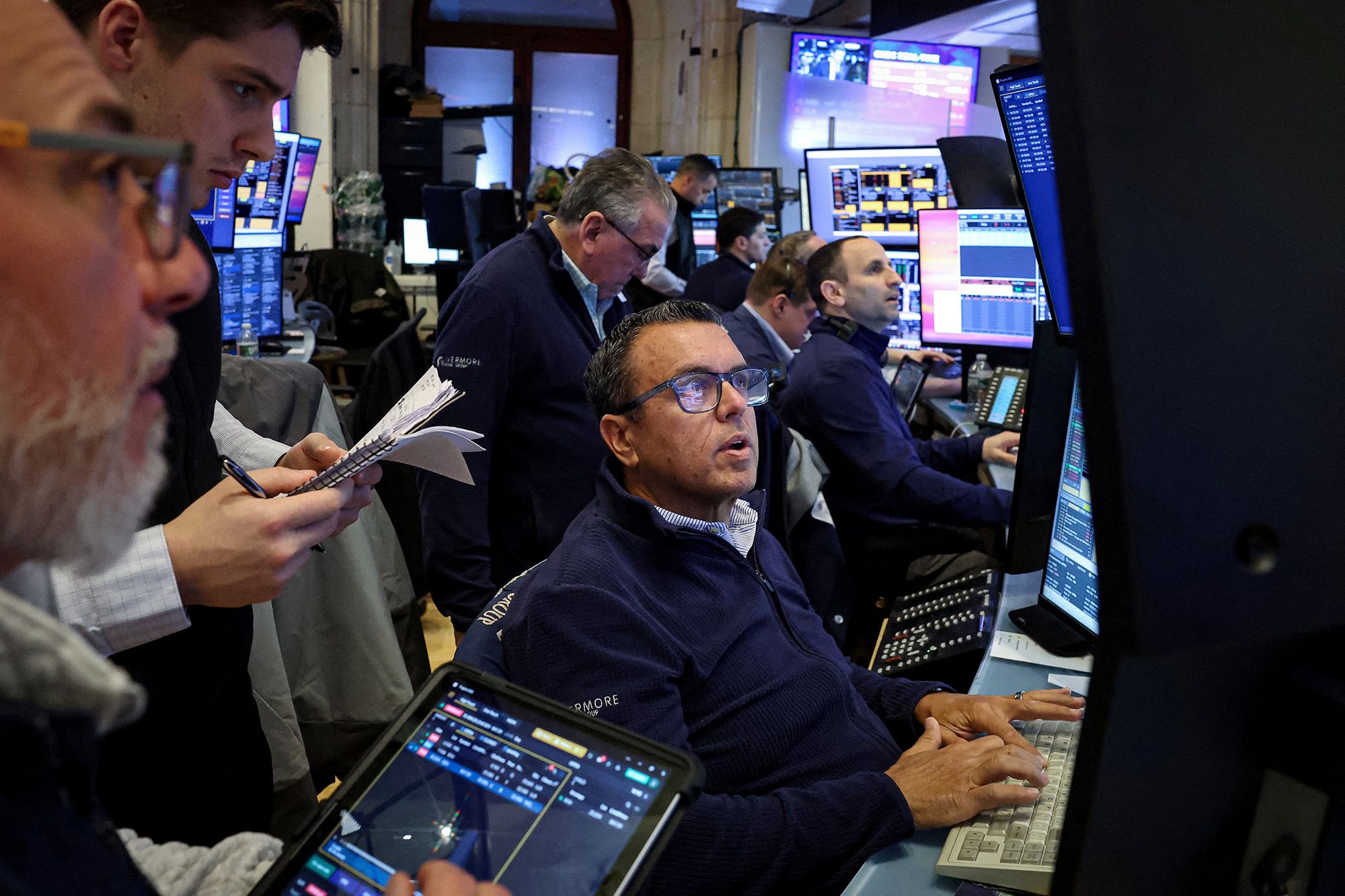
Markets have staged a swift upswing following the recent bout of turbulence, with leading indices regaining ground lost amid geopolitical strains, even as investor confidence persists alongside ongoing global uncertainty.Over the past two weeks, US equity markets have mounted a strong rebound, undoing the earlier pullback that emerged after tensions escalated between the United States and Iran, and this renewed momentum has lifted major benchmarks like the S&P 500 and Nasdaq to levels that not only recover prior losses but in some instances drive them close to fresh peaks, signaling a marked shift from the recently prevailing sense of caution.The…
Read More
Allbirds shares soar 600% as it pivots from footwear to AI

How Allbirds’ AI Shift Led to 600% Stock Gain

A once-renowned footwear label is now experiencing a sweeping overhaul after several years of waning results, shifting away from its sustainability-focused image as it seeks to establish a new foothold within the rapidly expanding artificial intelligence arena.In a surprising shift that stunned investors and industry watchers alike, Allbirds has unveiled a broad transformation of its business strategy, bringing its original mission to a close and opening a new era focused on artificial intelligence infrastructure. This decision follows years of financial headwinds and waning market traction, marking a clear departure from the company’s former role as an innovator in environmentally mindful…
Read More
Finland: How deep-tech startups prove commercial traction in small home markets

Finland’s Deep Tech: Achieving Commercial Traction

Finland is a country of roughly 5.5–5.6 million people with unusually high digital and scientific literacy, strong public research institutions, and a culture that supports engineering-intensive ventures. For deep-tech startups — companies building hardware, advanced materials, space, quantum, sensors, or scientifically rooted software — the Finnish home market is too small to scale purely by domestic sales. Yet many Finnish deep-tech startups show clear commercial traction early on. They do so by turning the constraints of a small market into strategic advantages: tight customer feedback loops, high-quality pilot partners, and efficient use of public R&D funding to de-risk technology before…
Read More
How do investors evaluate tail-risk hedges in practical terms?

How do investors evaluate tail-risk hedges in practical terms?

Tail risk refers to low-probability, high-impact market events that sit in the extreme ends of return distributions. Examples include sudden equity crashes, volatility spikes, liquidity freezes, or correlated sell-offs across asset classes. Investors use tail-risk hedges to protect portfolios against these events, accepting a steady cost in normal markets in exchange for protection during crises.In practical terms, investors evaluate tail-risk hedges not by asking whether they make money on average, but whether they meaningfully improve portfolio outcomes when stress arrives. This evaluation blends quantitative metrics, qualitative judgment, operational constraints, and governance considerations.Clarifying the Goal: Which Issue Is This Hedge Designed…
Read More
Russia: How investors evaluate sanctions exposure and indirect supply-chain risk

Russia Sanctions: Indirect Supply-Chain Risk for Investors

The Russian Federation is a unique case for investors because sanctions are extensive, dynamic, and enforced by major jurisdictions with extra-territorial reach. Beyond direct assets and revenue exposure, companies face complex indirect exposures through suppliers, customers, shipping, insurance, financing and counterparties. Assessing these risks requires integrated legal, operational, financial and geopolitical analysis to avoid regulatory violations, stranded assets, loss of market access and reputational damage.Varieties of sanctions and actions that may impact investorsRussia-related measures are grouped into categories that shape how investors are affected:Sectoral sanctions directed at the energy, finance, defence, and technology industries, restricting the issuance of debt or…
Read More
What trends are shaping investor education and the rise of DIY investing tools?

Investor Education Trends: DIY Investing Tools Rise

Investor education is rapidly evolving as digital platforms, expanded data access, and shifting investor demographics transform how people understand and engage with financial markets, while do-it-yourself investing solutions have progressed from simple trading screens to full ecosystems blending education, analysis, and trade execution, and together these advances mutually reinforce each other, generating a cycle in which stronger education nurtures more confident self-directed investors and improved tools inspire even deeper learning.Democratization of Financial KnowledgeOne of the most influential trends shaping investor education is the broad democratization of financial information. Market data, once available mainly to institutions, is now accessible to retail…
Read More
Scotland, in the United Kingdom: How renewable resources shape regional investment theses

Regional Investment in Scotland: A Renewable Energy Focus

Scotland lies where exceptional renewable assets, forward-looking climate policies, and a longstanding offshore engineering tradition converge, a mix that shapes clear, investable regional stories rather than a uniform market. Investors assessing Scottish prospects, ranging from utility-scale offshore wind projects to community-run tidal installations and emerging hydrogen hubs, need to interpret resource availability, grid behavior, local expertise, regulatory backing, and offtake structures to build distinct risk-return assessments.Resource landscape and strategic implicationsOffshore wind (fixed and floating): Scottish seas have very high wind speeds and large areas of deep water. Conventional fixed-bottom offshore wind is concentrated on the continental shelf, while Scotland’s deeper…
Read More
Prague, in the Czech Republic: What makes a SaaS company sticky in B2B markets

Prague, in the Czech Republic: Enhancing B2B SaaS Retention

Prague stands out as a dynamic European tech center that has nurtured B2B SaaS firms capable of serving demanding enterprise clients throughout Europe and worldwide. The fundamental market conditions that determine long‑term retention for companies based in Prague tend to be universal: enterprises prioritize stability, reliable ROI, and seamlessly integrated workflows. This article outlines the drivers behind resilient customer relationships in B2B SaaS, highlights practical tactics with examples from firms founded in Prague, and offers a clear, data‑oriented guide for founders and growth executives.The meaning of “sticky” within B2B SaaSRetention over acquisition: Customers remain engaged and typically broaden their usage…
Read More