Our website uses cookies to improve and personalize your experience and to display advertisements (if any). Our website may also include third-party cookies such as Google Adsense, Google Analytics, and YouTube. By using the website, you agree to the use of cookies. We have updated our Privacy Policy. Click the button to view our Privacy Policy.

Avatar photo

Maxwell Knight

850 Posts
Why is in-orbit servicing becoming a strategic space capability?

In-Orbit Servicing: A Key Strategic Space Capability

In-orbit servicing refers to the ability to inspect, repair, refuel, upgrade, or reposition spacecraft after launch. Once considered experimental, it is now emerging as a strategic capability with economic, security, and sustainability implications. As space becomes more congested and contested, the ability to maintain and adapt assets already in orbit is reshaping how governments and companies plan long-term space operations.The Economic Rationale: Maximizing the Longevity of High-Value AssetsModern satellites, particularly those in geostationary orbit, often cost several hundred million dollars to design, launch, and insure. Their operational lifetimes are frequently limited not by payload failure, but by depleted propellant or…

Read More
Bayside modern homes 9

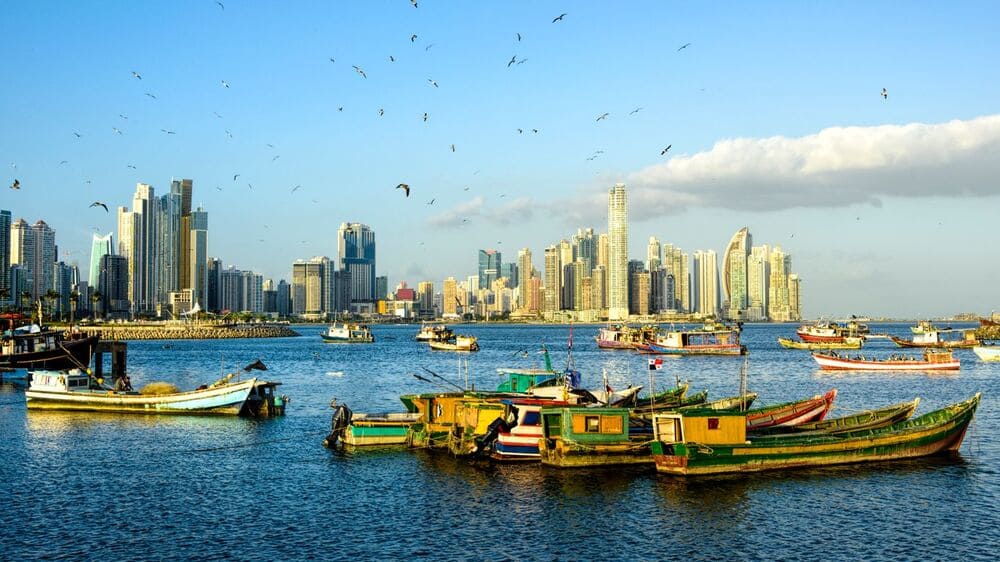
Panama’s green homes: a growing trend

New priorities centered on quality of life have reshaped Panama’s residential market in recent years, bringing notable shifts. Today, homes and communities featuring green spaces along with generous open areas are especially prized, with demand rising as interest grows in settings that foster peace of mind, comfort, and a closer bond with nature. This trend reflects both lifestyle preferences and considerations tied to investment potential and long-term property value.Green spaces now stand out as a major distinction in contemporary residential developments, including Bayside. Gardens, on-site parks, walking paths, and leisure areas elevate day-to-day living for residents while also boosting the…
Read More
Ecuador: How dollarized economies change credit, inflation, and investment planning

Ecuador: How dollarized economies change credit, inflation, and investment planning

Ecuador adopted the United States dollar as legal tender in 2000 after a severe banking and currency crisis. That decisive move eliminated exchange rate volatility with respect to the dollar and effectively outsourced monetary policy to the U.S. Federal Reserve. Dollarization reshaped macroeconomic trade-offs: it delivered price stability and lower inflation expectations, but it also removed key policy tools — a national lender of last resort, an independent interest-rate policy, and the capacity to monetize fiscal deficits. These structural shifts continue to influence credit conditions, inflation dynamics, and investment planning in distinct and sometimes countervailing ways.How dollarization changes inflation dynamicsImported…
Read More
Chile: corporate CSR advancing transparency and community participation in local projects

Chilean Pension Funds: Shaping Local Markets & Long-Term Investment

Santiago is not just Chile’s political and financial hub; it also serves as the core of a pension-driven capital market widely regarded as a global benchmark for private, long-term institutional investment. Across the city’s exchanges, corporate boardrooms, fixed-income operations, and project finance platforms, a financial system functions in which private pension funds stand among the most significant, enduring, and influential institutional participants. This article explores how the concentration of retirement assets reshapes capital deployment, market dynamics, corporate governance, and the motivations behind long-horizon investment strategies.Origins and basic structureThe contemporary Chilean pension framework is anchored in an individual capitalization approach established…
Read More
Why tax advantages in Panama

Foreign Real Estate Investment: Panama’s Tax Incentives Explained

Panama has emerged as one of the region’s most appealing locations for real estate investment, driven in large part by its favorable tax framework and consistent economic stability. The tax benefits available in Panama have drawn increasing attention from international investors aiming to reduce their fiscal load while safeguarding the long‑term performance of their assets.The country has successfully positioned itself as a reliable jurisdiction for foreign investment, combining legal certainty, tax incentives, and a solid economic structure. This scenario has allowed both individual buyers and institutional investors to view Panama as a strategic location for diversifying their real estate portfolios,…
Read More
Why are antitrust trends influencing big-tech strategy and valuations?

How Antitrust Shapes Big Tech: Strategy & Valuation Implications

Antitrust policy has moved from a distant regulatory concern to a direct strategic force influencing how major technology companies function, allocate capital, and are assessed by markets, as governments increasingly regard digital platforms as essential infrastructure with considerable economic and social influence, a change that is reshaping business models, deal strategies, and investor expectations throughout the industry.The Regulatory Turn: Moving Beyond Individual Evaluations Toward Broad System OversightFor decades, antitrust enforcement focused on discrete conduct, such as price fixing or merger control. Today, regulators increasingly apply a systemic lens to digital platforms, targeting market structure, data advantages, and network effects.Leading factors…
Read More
What trends are shaping blockchain scalability without sacrificing security?

The Security-Scalability Nexus in Blockchain

Blockchain scalability has long been constrained by the so-called trilemma: achieving decentralization, security, and scalability at the same time. Early blockchains prioritized security and decentralization, which limited transaction throughput and increased costs during periods of high demand. Recent innovation, however, shows that scalability does not need to come at the expense of security. A set of architectural, cryptographic, and economic trends is reshaping how blockchains grow while preserving trust guarantees.Layer 2 Solutions Becoming Core InfrastructureOne of the most impactful developments involves the continued evolution of Layer 2 scaling solutions. Rather than adding extra pressure to the primary blockchain, these Layer…
Read More
Vienna, in Austria: What makes public procurement opportunities accessible to SMEs

SMEs & Public Contracts: Vienna’s Accessibility Initiatives

Vienna integrates its local procurement strategy, digital systems, and business assistance programs to broaden access to public contracts for small and medium enterprises (SMEs). The city’s procurement framework aligns with broader European regulations designed to keep public spending competitive, transparent, and inclusive. For SMEs, this framework translates into concrete advantages such as more manageable contract sizes, streamlined qualification requirements, early engagement opportunities, and specialized support services. Below I outline the legal and operational processes, share illustrative examples and figures, and suggest practical steps for SMEs seeking to get involved.Legal and policy framework that favors SME accessAlignment with European procurement directives:…
Read More
What is tailoring?

Tailoring Basics: What You Need to Know

Tailoring is the art and craft of designing, cutting, fitting, and finishing garments, particularly suits and coats. A bespoke tailored garment is created specifically to fit the exact specifications and measurements of an individual client. The term 'tailor' has its origins in the Latin word "taliare," meaning "to cut," which is a fitting description of the meticulous craft that has been refined through centuries.The Artistry Behind TailoringTailoring involves a series of complex processes that require precision, expertise, and an eye for detail. It begins with the selection of fabric, which is a crucial element in the overall quality and appearance…
Read More
Bolivia: What investors should know about infrastructure gaps and market access

Investor Focus: Bolivia’s Infrastructure and Market Dynamics

Bolivia brings together rich natural resources, accelerating urban growth in major cities, and a strategically central South American location, yet it also faces notable infrastructure gaps and a unique regulatory landscape. For investors, recognizing where physical, logistical, and institutional constraints remain — and how these factors shape access to key markets — is crucial for designing projects that are both durable and economically sound.Macroeconomic overview and strategic landscapeEconomic profile: A middle-income economy sustained by hydrocarbons, mining activities such as tin, silver, zinc, and copper, as well as agriculture including soybeans and beef, while lithium has begun to attract greater attention.…
Read More