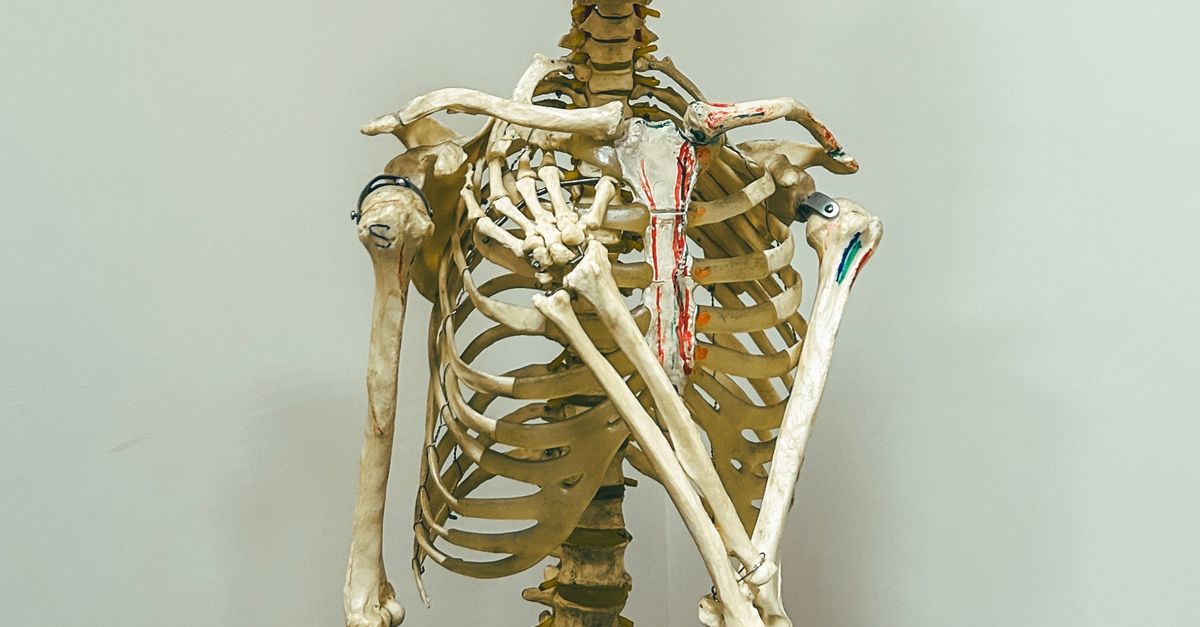
Why Fossils Matter for Understanding Human Evolution
The story of human evolution is written in stone. Fossils provide direct anatomical evidence of how our ancestors looked, moved, ate, and interacted with their environments. Unlike genetic data, which traces lineage relationships, fossils reveal physical adaptations in real time: the shift to upright walking, the expansion of brain size, changes in diet, and the emergence of culture. Among thousands of discoveries, a small number stand out for fundamentally reshaping scientific understanding. The eight fossils below are considered pivotal because they clarify evolutionary transitions, redefine timelines, or challenge previous assumptions.
1. Sahelanthropus tchadensis (“Toumaï”)
Found in Chad back in 2001 and estimated to be roughly 7 million years old, Sahelanthropus tchadensis stands as one of the most ancient hominins ever identified. Its cranium merges a modest brain volume—roughly 350 cubic centimeters, comparable to a chimpanzee—with a fairly flat facial structure alongside reduced canine teeth.
The position of the foramen magnum, the opening where the spinal cord enters the skull, suggests upright posture. This hints that bipedalism may have begun close to the divergence between humans and chimpanzees. Toumaï shifted the geographic focus of early hominin evolution from East Africa to a broader pan-African context, expanding the map of human origins.
2. Ardipithecus ramidus (“Ardi”)
Dating to 4.4 million years ago, Ardipithecus ramidus was uncovered in Ethiopia and described in detail in 2009. Ardi’s skeleton reveals a unique mix of traits: a grasping big toe suited for climbing, alongside pelvic features consistent with upright walking.
Unlike chimpanzees, Ardi lacked adaptations for knuckle-walking, indicating that the last common ancestor of humans and chimpanzees may not have resembled modern apes. This fossil reshaped debates about the nature of early bipedalism and forest habitation, showing that walking on two legs emerged in woodland environments rather than open savannas.
3. Australopithecus afarensis (“Lucy”)
Discovered in 1974 in Ethiopia and dated to 3.2 million years ago, Lucy remains one of the most famous fossils ever found. With about 40 percent of her skeleton preserved, she provided definitive proof that early hominins walked upright long before large brains evolved.
Lucy stood about 3.5 feet tall, featuring long arms and curved fingers that pointed to arboreal proficiency. Her brain measured roughly 400 cubic centimeters, though her pelvic and knee architecture confirm regular bipedalism. The Laetoli footprints in Tanzania, dated to 3.6 million years ago and attributed to the identical lineage, additionally prove completely upright locomotion. Lucy cemented the notion that bipedalism preceded encephalization within human evolution.
4. Australopithecus africanus (“Taung Child”)
The Taung Child, unearthed in South Africa back in 1924, stands as the initial early hominin fossil ever recognized across the continent. Going back roughly 2.8 million years, this young skull exhibited a compact brain alongside human-like teeth and indications of an upright gait.
At a time when many scientists believed human origins lay in Asia or Europe, the Taung Child shifted attention to Africa. Its discovery marked a turning point in paleoanthropology and laid the foundation for the acceptance of African origins for humanity.
5. Paranthropus boisei (“Nutcracker Man”)
Unearthed in 1959 at Olduvai Gorge in Tanzania, Paranthropus boisei lived around 1.8 million years ago. Its massive jaws, huge molars, and sagittal crest for powerful chewing muscles suggest specialization for tough, fibrous plant foods.
With a brain size of about 500–550 cubic centimeters, this species demonstrates that not all hominins followed the same evolutionary path. Paranthropus represents a side branch that eventually went extinct. Its existence highlights the diversity of hominin adaptations and underscores that evolution is not a straight line but a branching tree.
6. Homo habilis (“Handy Man”)
Emerging roughly between 2.4 and 1.4 million years back, Homo habilis is linked to several of the earliest recognized stone implements, known as Oldowan tools. Remains unearthed in East Africa display cranial capacities averaging 600 to 700 cubic centimeters, exceeding those of australopithecines.
Hand bones indicate precision grip capability, enabling systematic tool production. The emergence of tool use marks a cognitive and behavioral shift, suggesting increased problem-solving skills and dietary flexibility. Homo habilis bridges the gap between earlier australopithecines and later members of the genus Homo.
7. Homo erectus (“Turkana Boy”)
The Turkana Boy skeleton, discovered in Kenya in 1984 and dated to about 1.6 million years ago, is one of the most complete early human skeletons ever found. Classified as Homo erectus, this species had a modern body proportion with long legs adapted for long-distance walking and running.
Brain size ranged from 800 to over 1,000 cubic centimeters. Homo erectus was the first hominin known to migrate out of Africa, reaching parts of Eurasia. Evidence suggests control of fire and more sophisticated Acheulean tools. Turkana Boy provides critical insight into the transition toward a more human-like physique and expanded geographic range.
8. Homo neanderthalensis (Neanderthals)
Neanderthal fossils, first discovered in 1856 in Germany, date from about 400,000 to 40,000 years ago. With brain sizes averaging 1,400 cubic centimeters, comparable to or slightly larger than modern humans, Neanderthals were robust and adapted to cold climates.
Archaeological evidence reveals burial practices, symbolic objects, and complex tools. Genetic studies confirm interbreeding between Neanderthals and modern humans, with non-African populations carrying about 1–2 percent Neanderthal DNA. Their fossils challenge earlier stereotypes and demonstrate that cognitive and cultural sophistication was not unique to Homo sapiens.
Key Evolutionary Patterns Revealed by These Fossils
- Bipedalism preceded large brains, as shown by Lucy and earlier hominins.
- Human evolution is branching, not linear, illustrated by side groups like Paranthropus.
- Brain expansion occurred gradually, particularly within the genus Homo.
- Migration shaped evolution, especially with Homo erectus dispersing beyond Africa.
- Cultural complexity predates modern humans, as demonstrated by Neanderthals.
The Broader Significance
Each of these fossils represents more than a skeleton; each marks a conceptual shift in understanding what it means to be human. From the earliest hints of upright posture in Sahelanthropus to the cultural depth of Neanderthals, the record shows experimentation, adaptation, and resilience over millions of years. Human evolution emerges not as a ladder of progress but as a dynamic mosaic of traits appearing at different times and places. The enduring value of these fossils lies in how they continue to refine the narrative of our origins, reminding us that humanity is both ancient and intricately connected to the broader web of life.