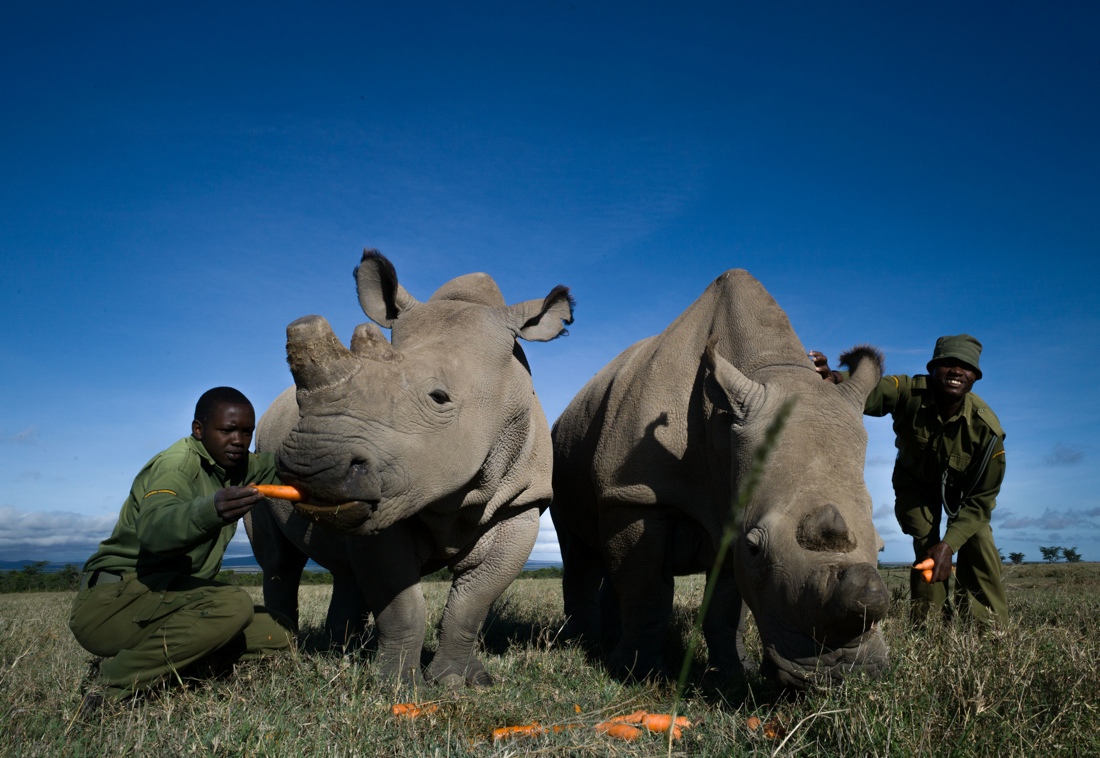
The northern white rhino is one of the most critically endangered animals on the planet. Today, only two of these majestic creatures remain alive, both of them females living under strict protection. This alarming reality has sparked an urgent global effort to save the species from vanishing forever. The race is not only about preserving an animal but about ensuring biodiversity and preventing a tragic loss in Earth’s natural heritage.
This emergency has led to the development of an impactful documentary portraying the final phase of the northern white rhino’s tale. The movie records the work of researchers, conservationists, and animal guardians who have committed their lives to avoiding extinction. It is a moving experience filled with hope, scientific advances, and tenacity. Although the task is overwhelming, the endeavor to restore the species proceeds via cutting-edge reproductive methods and unwavering human dedication.
The disappearance of the northern white rhino has been caused by many years of illegal hunting and loss of habitat. Their horns, greatly prized in unlawful markets, resulted in extensive slaughter across Africa in the latter part of the 20th century. Even though global trade prohibitions were enacted, the harm was irreversible. By the time significant preservation attempts started, only a few animals remained, forcing researchers to urgently seek remedies.
Today, the two surviving rhinos live in a conservancy in Kenya, under round-the-clock armed protection. Their names, Najin and Fatu, have become symbols of resilience and vulnerability. Both are females and cannot carry pregnancies, which means natural breeding is no longer an option. However, researchers are using advanced techniques such as in vitro fertilization and surrogate mothers to keep the species alive. This approach represents one of the most ambitious conservation projects ever attempted.
The film showcases the human side of this mission. Viewers witness the bond between the rhinos and their caretakers, who have formed deep emotional connections over years of working together. The dedication is extraordinary; many caretakers have given up other opportunities to remain by the rhinos’ side, understanding the historical importance of their work. Every day spent with these animals is a reminder of what is at stake and what the world stands to lose if the effort fails.
Scientists leading the project come from different parts of the globe, uniting their expertise for a single purpose. Laboratories in Europe and Africa have been working on collecting and preserving genetic material from the last northern white rhinos. This includes harvesting eggs from the living females and using sperm stored from deceased males. The embryos created are kept frozen, awaiting a suitable surrogate mother from a closely related species—the southern white rhino.
Although the progress in technology is remarkable, there is no assurance of success. The undertaking demands significant financial and time resources and is not without challenges. Each embryo transfer necessitates meticulous accuracy, and not all efforts will result in a successful pregnancy. Nonetheless, dedication is steadfast. For those dedicated to conservation, the mere possibility of preserving a species justifies all the exertion. This initiative symbolizes optimism in a world where species are disappearing at an alarming rate.
The film does more than tell a scientific story; it raises awareness about the human responsibility to protect endangered animals. It forces viewers to reflect on how human actions have led to this point and what can be done to prevent similar crises in the future. Climate change, habitat loss, and poaching continue to threaten countless species, making the northern white rhino a symbol of a much larger battle.
Education plays a key role in this fight. By sharing the story through film, conservationists hope to inspire new generations to take action. Protecting biodiversity requires global cooperation, strong policies, and financial support. If the northern white rhino can be saved, it will prove that science and compassion can work together to correct past mistakes. It will also send a powerful message that extinction is not inevitable when humans choose to intervene.
The documentary is not just a chronicle of despair; it is a testament to resilience and innovation. Every scene captures the tension between loss and hope, illustrating that even at the brink of extinction, life finds a way through human determination. The survival of the northern white rhino may depend on technology, but it also relies on the world’s willingness to value and protect nature.
As the narrative progresses, it becomes evident that the battle to protect the northern white rhino transcends a single species. It is about maintaining ecological balance, celebrating the magnificence of nature, and recognizing our responsibility as caretakers of Earth. This initiative pushes us to rethink conservation possibilities and emphasizes the urgency of taking action for other threatened species now.
If successful, this initiative could serve as a blueprint for saving other animals on the verge of extinction. The lessons learned from this project may help protect species like elephants, tigers, and countless others threatened by human activity. The film makes it evident that extinction is not just a scientific problem but a moral one, demanding a collective response from society.
The path of the northern white rhino has not yet reached its end. Despite the formidable challenges, the resolve of the individuals working towards its preservation provides a glimmer of optimism. Regardless of the species’ fate, the actions taken to protect it will have a profound effect on conservation science and worldwide consciousness. This narrative serves as a testament to humanity’s ability not only to devastate but also to mend and rejuvenate.