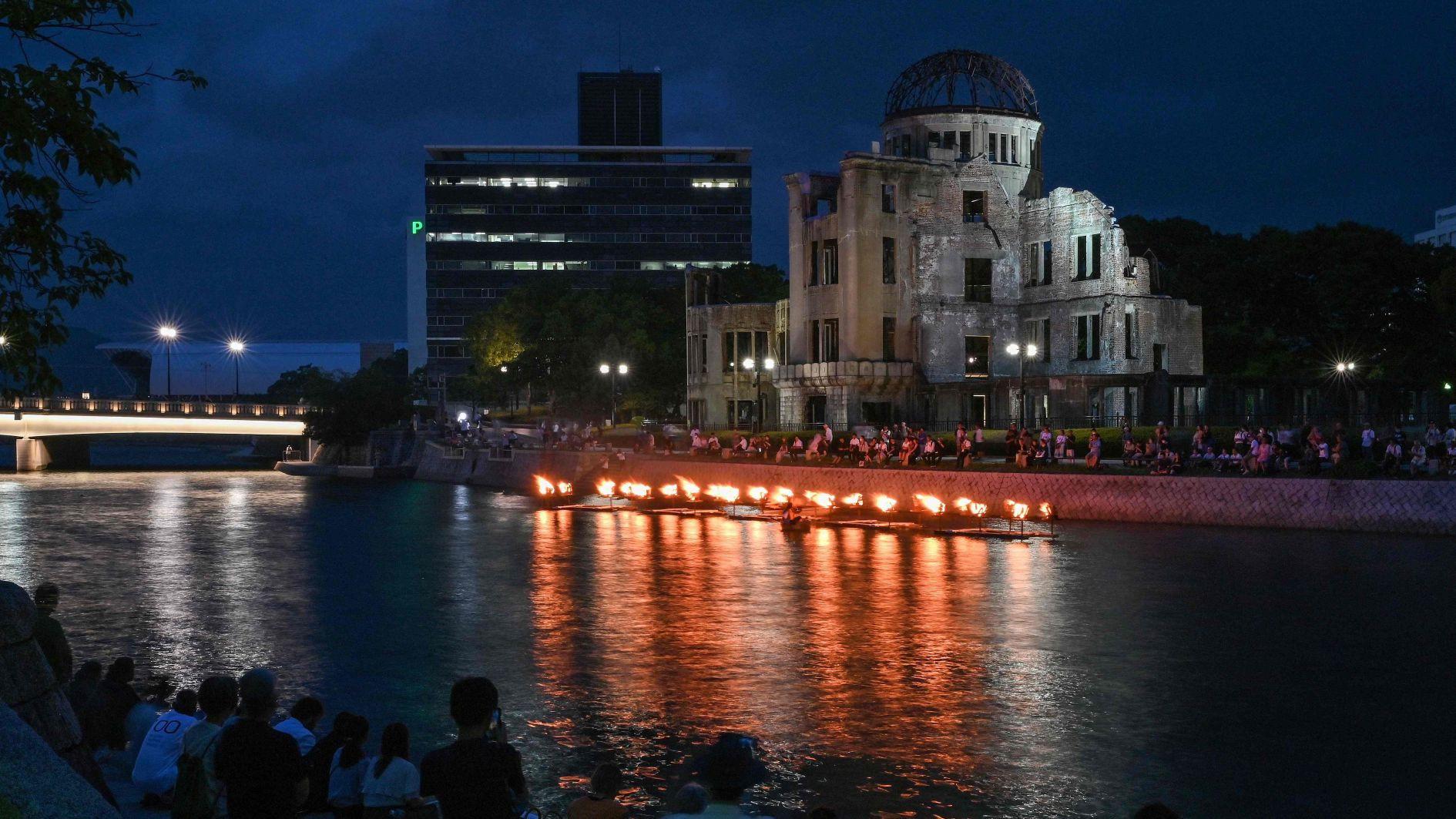
La ciudad de Hiroshima conmemoró solemnemente el 80º aniversario del primer bombardeo atómico del mundo, un acontecimiento que alteró para siempre el rumbo de la historia humana. En esta ocasión sombría, sobrevivientes, sus descendientes y visitantes internacionales se reunieron en el Parque Memorial de la Paz para rendir homenaje a las víctimas y renovar los llamados al desarme nuclear. La ceremonia anual adquirió un significado especial este año, ya que el número de hibakusha (sobrevivientes de la bomba atómica) que quedan sigue disminuyendo, haciendo que sus testimonios sean cada vez más valiosos.
At exactly 8:15 am—the time when the explosion occurred on August 6, 1945—a moment of silence filled the memorial area. The Peace Bell’s deep sound noted the minute when the uranium bomb, called “Little Boy,” detonated about 600 meters over the city, immediately causing the death of around 70,000 individuals and eventually resulting in more than 140,000 casualties by the conclusion of 1945. The memorial activities featured the customary release of lanterns along the Motoyasu River, representing the spirits’ journey to the next world.
This year’s memorial carried particular urgency as geopolitical tensions have raised concerns about nuclear proliferation. Hiroshima’s mayor used his annual Peace Declaration to warn against complacency in nuclear disarmament efforts, noting that current global nuclear arsenals still possess catastrophic destructive potential. He emphasized how Hiroshima’s tragic experience offers indispensable lessons for humanity in an era when the risk of nuclear conflict has resurfaced after decades of relative stability.
Survivors shared poignant testimonies about the bombing’s immediate aftermath—the incomprehensible devastation, the harrowing search for loved ones amidst the ruins, and the suffering from radiation sickness in the following weeks and months. These firsthand accounts took on new importance as organizers worked to preserve these memories through digital archives and educational programs, ensuring future generations understand the human cost of nuclear weapons.
The memorial also highlighted the remarkable transformation of Hiroshima from a devastated wasteland to a thriving modern city that has become a global symbol of peace and resilience. Reconstruction efforts over the decades have created a vibrant urban center while carefully preserving certain bomb-damaged structures like the iconic Atomic Bomb Dome, which stands as a powerful visual reminder of that fateful day.
International representatives from countries with and without nuclear capabilities were present at the event, contemplating how the disaster in Hiroshima eventually resulted in the Treaty on the Non-Proliferation of Nuclear Weapons (NPT) and later disarmament treaties. Nonetheless, numerous speakers voiced their worries regarding recent hurdles in nuclear diplomacy and the upgrading of nuclear stockpiles by various countries.
Educational initiatives formed a key part of the anniversary events. The Hiroshima Peace Memorial Museum unveiled new exhibits documenting the long-term health effects suffered by survivors, including increased cancer risks and multi-generational psychological trauma. Special programs engaged young people in peace studies, emphasizing their future role in maintaining nuclear safeguards and promoting diplomatic solutions to international conflicts.
The anniversary also prompted reflection on the complex historical context surrounding the bombing decision. Historians participated in panel discussions examining the geopolitical circumstances of 1945, the development of nuclear technology during wartime, and the ethical questions that continue to surround the use of atomic weapons. These academic exchanges aimed to foster nuanced understanding rather than simplistic judgments about this pivotal moment in world history.
As night fell, thousands of paper lanterns illuminated the river flowing past the Peace Memorial Park, creating a breathtaking spectacle of remembrance. This beautiful tradition, started by survivors in the early years after the bombing, has grown into one of Hiroshima’s most moving commemorative acts, with participants from around the world joining in this symbolic gesture of peace and reconciliation.
The 80th anniversary acted as a reminiscence of the past while also urging for future initiatives. Given the ongoing nuclear tensions in various parts of the world and the pressure on arms control treaties, the peace message from Hiroshima stood out strongly. The planners of the event highlighted that recalling the events of August 6, 1945, is essential not only for paying tribute to history but also for safeguarding the future of humanity from committing its most severe errors again.
As the sun set on this day of remembrance, Hiroshima’s enduring message to the world remained clear: nuclear weapons must never be used again, and their complete elimination remains the only guarantee against future Hiroshimas. The city’s transformation from ground zero to global peace advocate stands as a testament to human resilience and the possibility of reconciliation, even after unimaginable tragedy.