

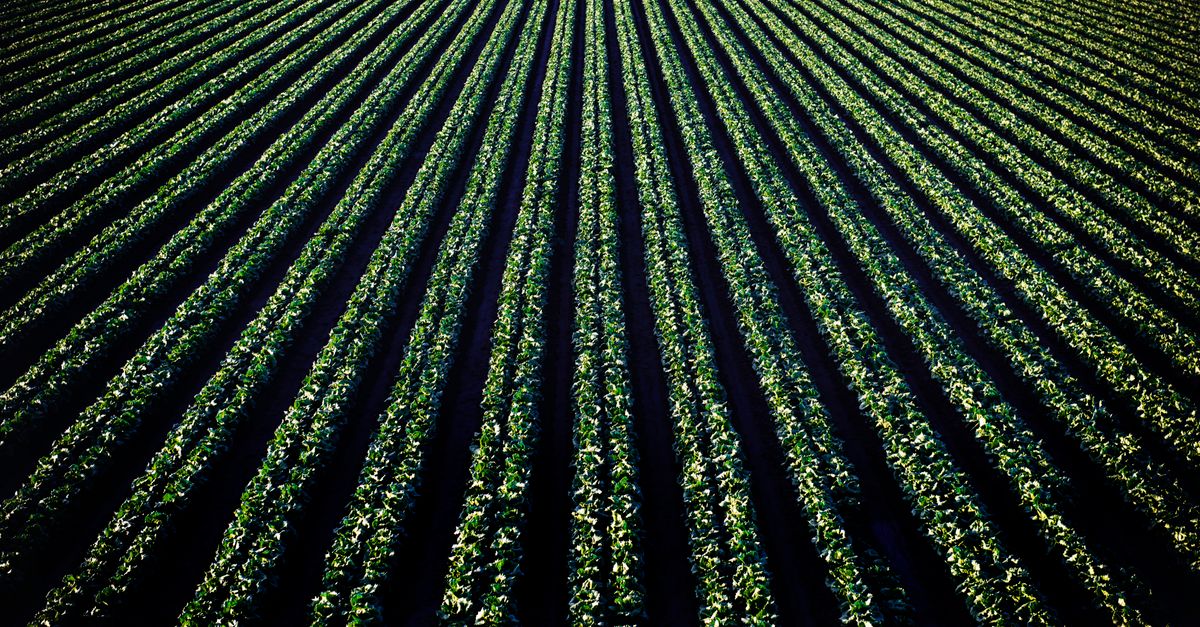
Paraguay is a strategically important, resource-rich country for agribusiness investment. Its comparative advantages include large tracts of underutilized agricultural land, abundant renewable water and low-cost electricity from major hydroelectric plants. Key constraints are uneven infrastructure, seasonal river navigability, land tenure complexity, deforestation risk, and the need for traceable supply chains. This article synthesizes how investors systematically evaluate land, water, and logistics constraints, with practical metrics, examples, and a due-diligence checklist.
Broader macro landscape and the importance of in-depth evaluation
Paraguay covers roughly 400,000 square kilometers and has two contrasting agro-ecological zones: the humid, fertile eastern region and the semi-arid Gran Chaco to the west. Soybean, maize, beef and cotton dominate agricultural exports. Hydropower capacity and cheap electricity support agro-processing, but much crop production remains rainfed and dependent on seasonal variability. Investors must weigh low land costs and yield potential against infrastructure gaps, environmental compliance, and export logistics.
Land assessment: what to test and quantify
Land evaluation is the first-stage filter. Investors combine remote sensing, field testing, legal checks, and economic modeling.
- Soil and topography: Test for texture, organic matter, pH, nutrient profile, salinity and compaction. Map slopes and erosion risk. Flat to gently undulating topography in eastern Paraguay typically supports mechanized row crops; the Chaco requires more land preparation and may need isolation from wetlands.
- Land-use history and satellite analytics: Use historical satellite imagery and NDVI time series to detect cropping patterns, pasture conversion, and recent deforestation. Buyers and financiers now demand verifiable non-deforestation histories for commodity markets.
- Legal title and tenure: Perform cadastral and chain-of-title checks, confirm property boundaries, encumbrances, outstanding claims, and compliance with zoning and protected-area rules. Look for community or indigenous claims and pending litigation.
- Accessibility and proximity to services: Measure distance to all-weather roads, electricity grids, labor pools and existing grain elevators. Cost modeling often uses distance-to-port multiplied by freight cost per ton-kilometer to estimate logistic expense.
- Yield potential and risk-adjusted returns: Integrate soil tests, climate normals, and farmer trial data to estimate realistic yields (not best-case yields). Build sensitivity analyses for drought, pest outbreaks and input-price shocks.
Example: An investor evaluating 5,000 hectares in Alto Paraná will prioritize field soil cores, NDVI trend analysis over five years, a legal search of municipal registries, and mapping of nearby elevators in Villeta and Asunción to estimate transport premiums.
Water assessment: availability, variability, and regulatory risk
Water evaluation in Paraguay examines crop-related water dynamics along with limitations tied to river-based export routes.
- Rainfall regimes and climate variability: Eastern Paraguay generally receives abundant rainfall (seasonal totals higher than western Chaco). However, El Niño/La Niña cycles create pronounced interannual variability. Investors model 10–30 year rainfall series to estimate probability of poor seasons and irrigation demand.
- Groundwater and irrigation potential: Quantify aquifer depths, recharge rates and water quality. Paraguay has abundant surface water and large renewable freshwater resources overall, but local groundwater availability can be limited or saline in parts of the Chaco.
- Surface water rights and permitting: Map riparian buffers and legal restrictions on water withdrawals and wetland conversion. Construction of irrigation infrastructure often requires environmental studies and municipal approvals.
- River navigability and seasonal draft: The Paraguay-Paraná waterway is the main export route. Low river stages during droughts reduce barge draft and increase transshipment costs. Model hydrological scenarios and include contingency transport costs during low-flow years.
- Environmental risk and certification: Deforestation for expansion triggers both reputational and buyer-market risks. Many international buyers require deforestation-free sourcing and traceability to avoid market exclusion.
Case observation: During drought years, lower Paraguay River levels have forced smaller loads per barge and higher per-ton transport costs; investors hedge this by investing in improved internal storage and flexible trucking capacity.
Logistics assessment: ports, roads, storage, and time-to-market
Logistics drive margins in commodity farming. Key considerations:
- Transport network quality: Evaluate road surface type and seasonal passability between fields and primary export corridors. Many rural roads are unpaved; rain can render them impassable and raise harvest-to-port costs significantly.
- Rail availability: Paraguay has limited active rail infrastructure; dependence on road and river transport remains high. Assess the feasibility and cost of private rail spurs or intermodal investments if volumes justify.
- River ports and transshipment capacity: Identify nearest river ports (examples: Villeta, Asunción and Concepción) and their handling capacity, storage, silos, and turnaround time. Bottlenecks at elevators and limited berthing slots can create seasonal congestion during harvest peaks.
- Cold chain and processing logistics: For perishable or value-added products, check availability and reliability of refrigerated transport and stable power supplies. Paraguay’s low-cost electricity is an advantage for processing, but distribution reliability varies by location.
- Customs, export permits and trade corridors: Assess administrative delays at customs and border crossings; membership in regional trade blocs helps but does not eliminate local procedural friction. Model additional days in logistic cycles and inventory carrying costs.
Example metric: A commercial feasibility model could draw on per ton-km transport expenses, typical road speeds (km/hour) during harvest periods, and standard port dwell durations to calculate the delivered cost for an international purchaser.
Regulatory, social and sustainability constraints
Investors must integrate legal, social and market-facing sustainability requirements.
- Environmental permitting and protected areas: National and local regulations govern forest clearance, wetland intervention, and riparian protection zones, and breaches typically trigger penalties, work suspensions, or restrictions imposed by buyers.
- Community and indigenous rights: Early engagement with nearby communities helps clarify traditional land practices and prevent disputes, and many financiers and off-takers now treat robust social license as a prerequisite.
- Market-driven compliance: Leading buyers and financial institutions increasingly demand supply chains free of deforestation, traceability down to the farm, and oversight mechanisms such as remote sensing or independent audits, while certification schemes and buyer standards can add further expenses.
- Tax and fiscal regime: Evaluate property and export tax frameworks, agro‑processing incentives, and any region‑specific investment benefits, as fiscal stability plays a key role in shaping long-term project IRR.
International soy purchasers have urged producers in Paraguay to embrace zero-deforestation sourcing, leading to expanded reliance on satellite tracking and stricter legal due‑diligence checks prior to acquiring land.
Operational and financial modeling
Well-informed investment choices call for comprehensive models that factor in capital outlays for on-farm assets, logistical operations, and environmental mitigation.
- Capex and opex items: Land acquisition, land preparation, irrigation systems, roads, storage, on-farm mechanization, labor and input procurement.
- Logistics cost modeling: Use distance-to-port matrices and multimodal rates (truck, barge, transshipment) and include seasonal variability for river draft and road passability.
- Scenario analyses: Run base, adverse and upside scenarios for yields, input prices, transport disruptions, and price realizations. Include contingency funding for social or environmental remediation.
- Return metrics: Internal rate of return (IRR), net present value (NPV), break-even yield and break-even freight cost per ton. Include sensitivity to increased certification costs and potential market access premiums for deforestation-free product.
Practical rule: For rainfed soybean projects, logistics and storage costs can materially change the per-hectare margin even when yields and commodity prices are constant; therefore investors often model per-ton logistics as a separate risk line item.
Operational guide for making decisions at the field level
- Complete satellite imagery analysis for at least five years to detect land-use changes.
- Collect soil cores on a grid (e.g., 2–5 ha sampling density) and analyze key parameters.
- Verify title, easements, and any community claims through an independent legal firm.
- Map water sources, test groundwater quality and model seasonal river levels.
- Quantify distance and transport condition to the nearest elevator and primary port.
- Estimate capex for access roads, bridges and drainage needed for reliable harvest access.
- Model logistics at multiple river-level scenarios and calculate contingency trucking costs.
- Plan for traceability and monitoring: geotag fields, register land parcels in supplier platforms, and subscribe to satellite deforestation alerts.
Case-oriented examples and illustrative outcomes
– Example A — Eastern Paraguay arable acquisition: A 3,000-hectare acquisition near a major river port required relatively low up-front road investment but revealed mixed soil fertility. After targeted liming and fertilizer application and modest on-farm drainage works, projected soy yields rose from conservative 2.2 t/ha to 3.0 t/ha; however, seasonally low river stages added a 7–10 USD/ton premium to transport costs in dry years. Investors mitigated this by contracting flexible trucking capacity and building additional onsite storage to smooth shipments.
– Example B — Gran Chaco ranch modernization: A 10,000-hectare pasture conversion project faced water scarcity and shallow aquifers. Investment concentrated on water capture (ponds and controlled wells), improved pasture species and rotational grazing to increase stocking rates. The longer payback reflected greater capital intensity and higher per-hectare infrastructure costs compared with eastern cropland.
– Market example: International buyers’ deforestation-free policies led multiple commodity processors to decline unidentified shipments lacking farm-level traceability, while producers that applied parcel-level mapping and independent audits achieved stronger pricing.

.jpg "How to Set Up an Offshore Company in Panama")
.jpg "Panama Pensionado Visa Requirements 2026")

.jpg "Real Estate Investment in Cap Cana in 2026")